November 06, 2026
MEDIA CONTACT: Chris Guanche, M.S., 954-201-7514 | cguanche@broward.edu

DAVIE, Fla. - Crime scene investigators (CSIs) play a vital role in the criminal justice system, meticulously gathering and analyzing trace evidence such as DNA, fingerprints, blood spatter, fibers and ballistics to help solve mysteries.

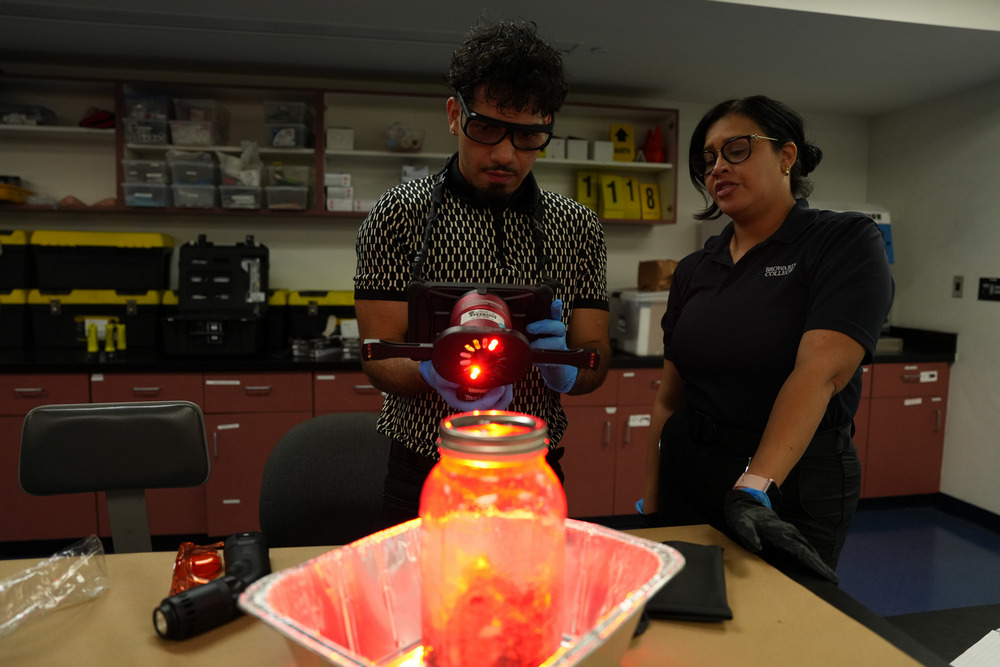
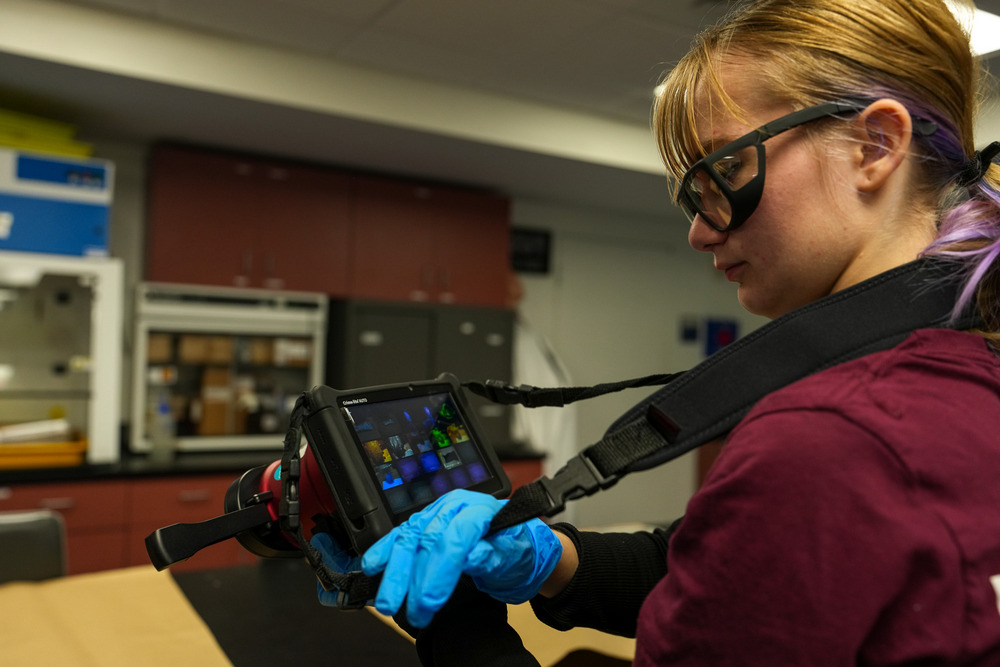
At Broward College, students studying crime scene technology get to work with a full spectrum forensic imaging device called Crime Lite Auto. The device helps the students to document a body’s decaying flesh beyond what the naked eye can see.

The Crime Lite Auto device is used across Florida by police departments and nationwide by federal agencies, but Broward College is one of only two state colleges in Florida using it for educational programs. Assistant Professor Patricia Santana-Alvarez, a former crime scene investigator (CSI), said the College acquired the $40,000 device through a grant. "It's not something you see in the field often, but it is emerging because of its capabilities,” she said.

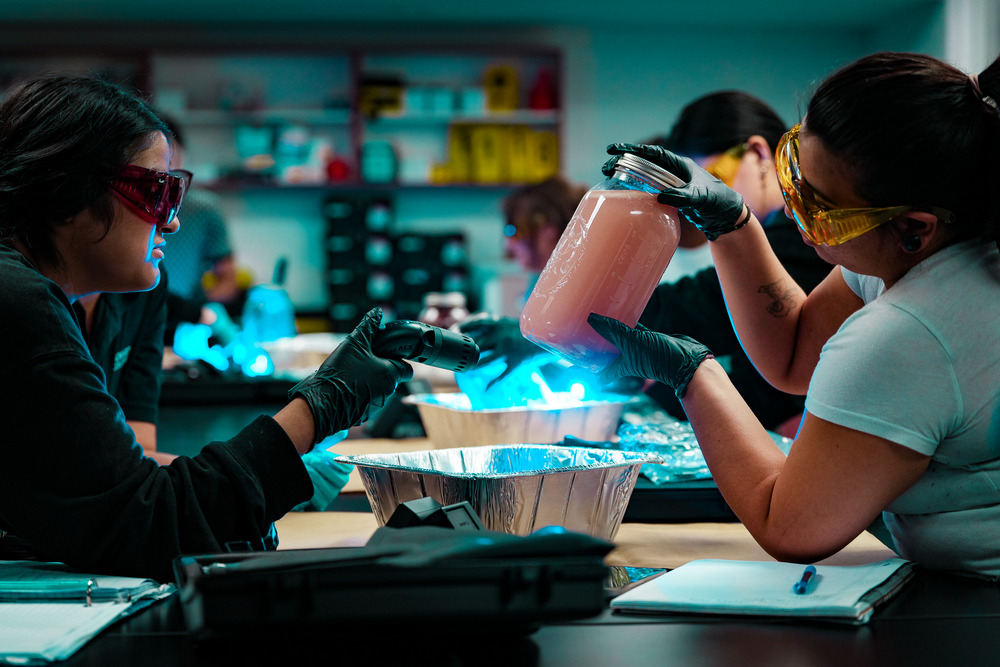
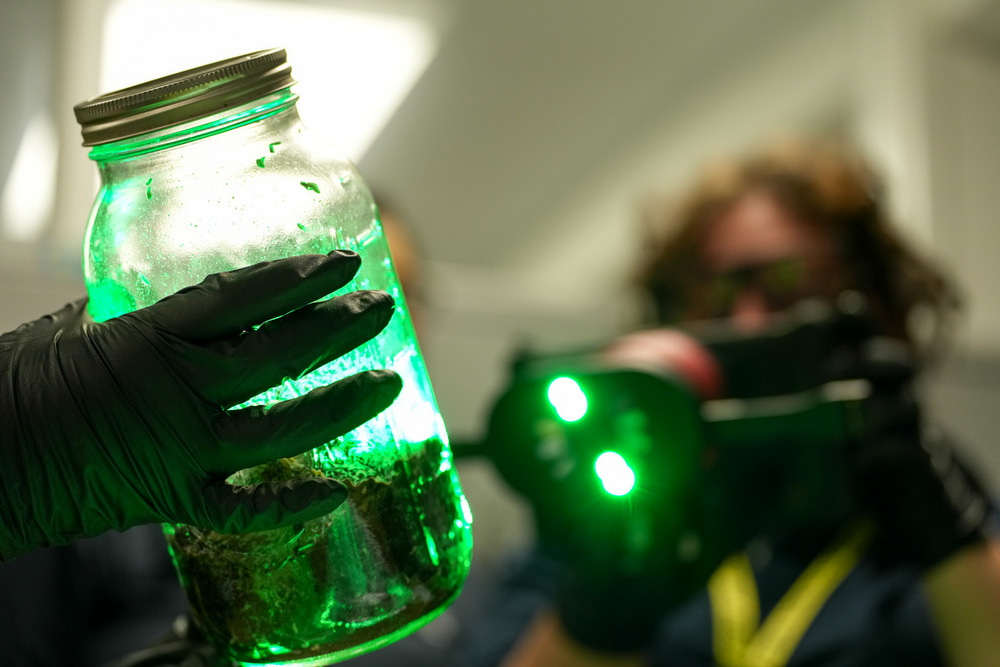
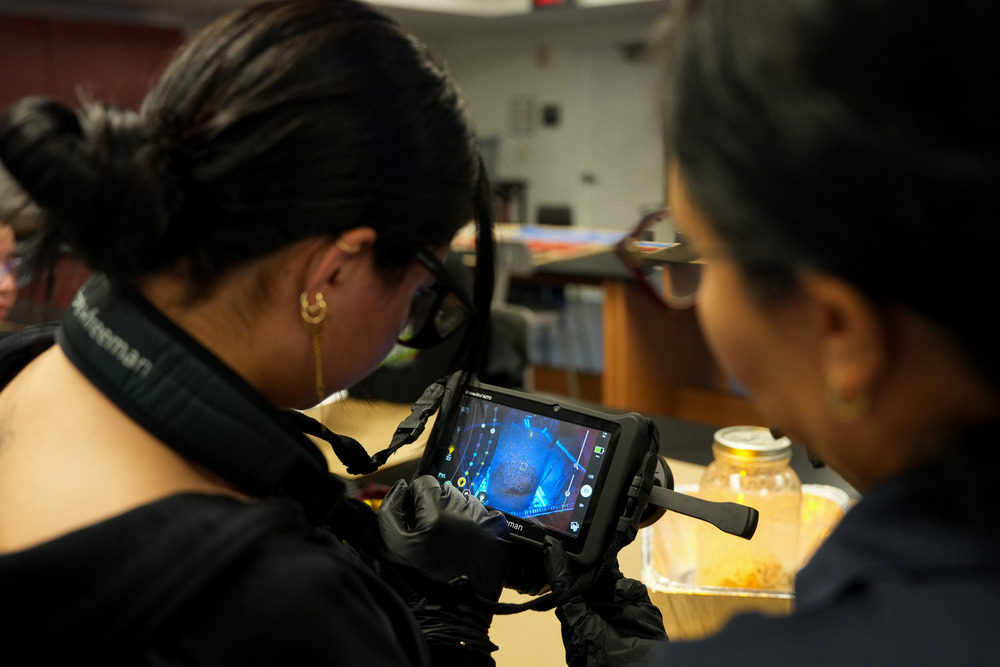
At first glance, the device resembles a camera lens bolted onto a tablet, but its complexity goes deeper. It has multiple lenses, and the touch screen controls allow the user to select 15 different spectrums to take photos and videos without having to physically change lenses. The user wears special glasses to see these details beyond the visible spectrum.

It represents a major change from Santana-Alvarez's time in the field as a CSI.

“My job would have been much easier,” she said. "The portability and accessibility of it makes it better than other equipment."

Story continues after photo gallery.

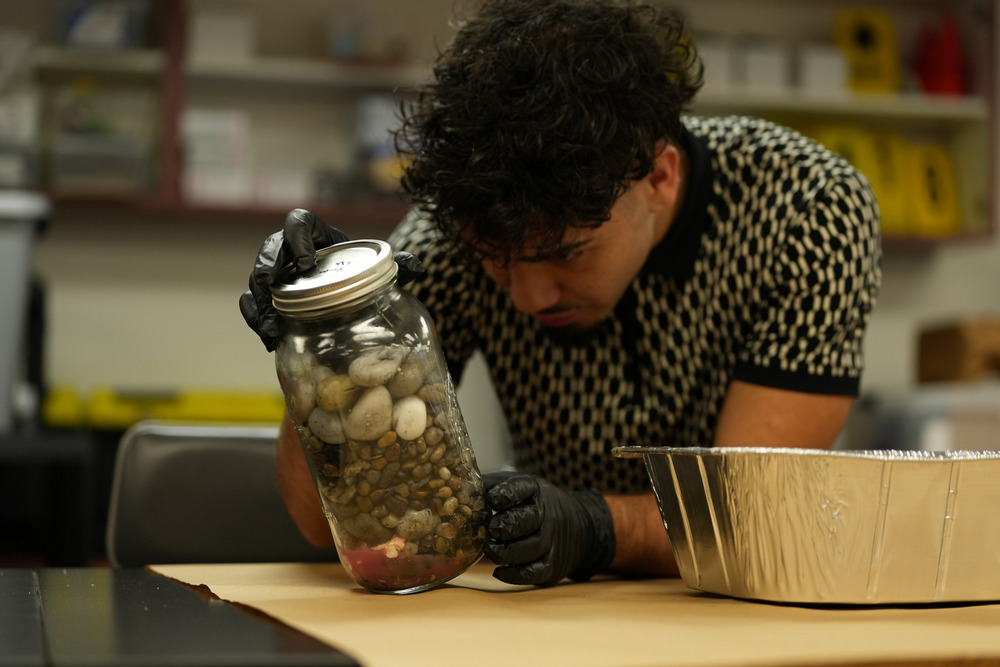
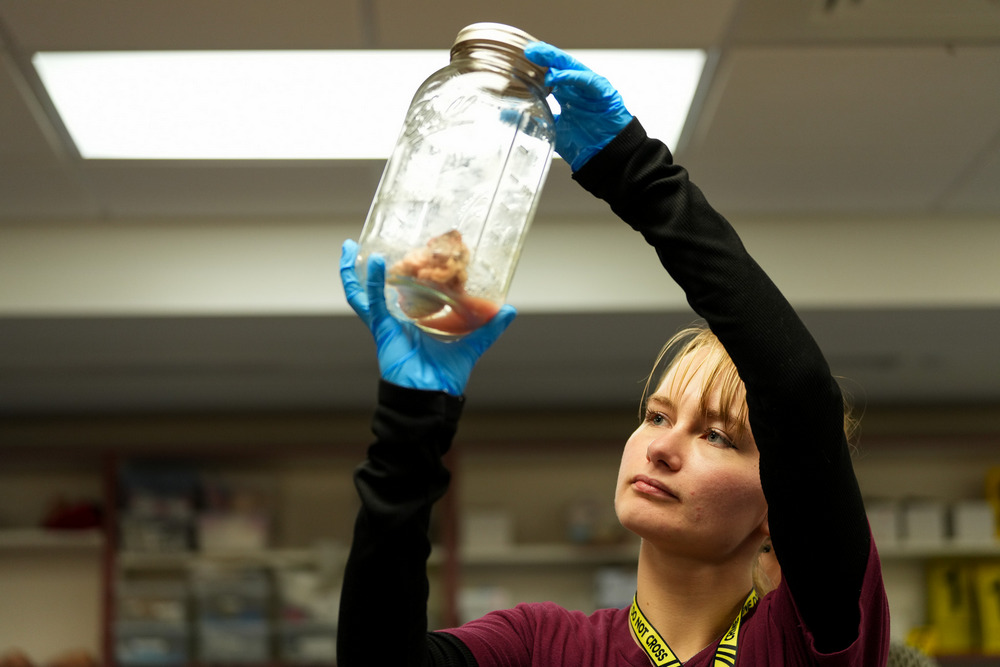
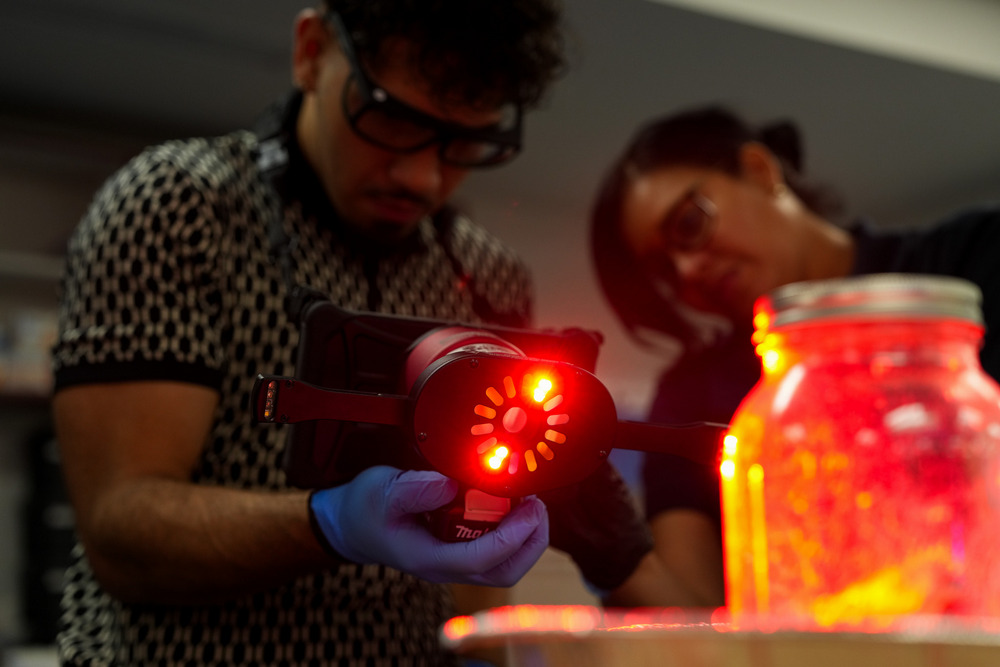
In the Advanced Crime Scene Investigation course at the College’s Institute of Public Safety, the role of a decomposing body is played by a pig, whose parts are stored in different jars to simulate different environments where a body can be buried. Some parts are placed in dirt to simulate a body left on the ground or just below the surface, while other parts are placed under rocks to recreate a deeper burial.

Students like Jayden Torres and Genesis Gomez recently took their turn with the Crime Lite Auto after first examining their assigned jars with the UltraLite ALS, a lightweight forensic light scanning device and glasses that can work on the infrared and ultraviolet spectrums. Santana-Alvarez also volunteered as a live test subject, as students used the Crime Lite Auto to examine nail marks she pressed into her arm.

Torres said he was drawn to a career as a CSI out of a desire to close unsolved mysteries, so that families know "what happened to their loved ones when they died."

For Gomez, police procedural shows intrigued her and piqued her interest in a CSI career.

"This class confirmed that I want to do this, and I like how hands-on it is," she said. "I like to see the process of decomposition and insect activity."

After working with the Crime Lite Auto, the students transition to the class’s lecture portion, with discussions on related topics like blood stains and patterns. Through this class, Santana-Alvarez said she wants to use her experiences to prepare students for the challenges of the field, including long hours and staffing issues.

"It's not just the skillsets, it's integrity, morale, paying attention to policy, and everything else that comes with a police operation," she said.

-BC-

ABOUT BROWARD COLLEGE: Serving more than 55,000 students annually, Broward College provides students with certificate programs, two-year university-transfer degrees, two-year career degrees, and baccalaureate degrees in selected programs. The College’s mission is to provide high-quality educational programs and services that are affordable and accessible to our community of learners. Please visit www.broward.edu for more information.

Featured